Recycling and Sustainability at Deep Cleaning Sutton
 At Deep Cleaning Sutton, sustainability is built into the way we plan, carry out, and review every cleaning service. Our approach to recycling in Sutton is not treated as an add-on; it is part of a wider commitment to reducing waste, improving material recovery, and supporting a cleaner local environment. We work with practical low-waste methods so that everyday cleaning activity contributes to a more circular model of service delivery.
One of our core aims is to reach a recycling percentage target of 90% for suitable non-hazardous waste streams generated through our operations. This target covers commonly recoverable items such as cardboard, plastic containers, metal packaging, and clean paper-based waste where local processing routes allow. By monitoring how much can be diverted from landfill, our Deep Cleaning Sutton recycling policy helps us improve year by year and make more responsible choices when sorting, transporting, and disposing of waste.
In Sutton and the wider South London area, waste separation is becoming increasingly structured, with borough-led systems encouraging residents and businesses to keep recyclables distinct from general rubbish. That local culture supports our own processes, especially when we are handling clear bag separation, mixed dry recyclables, and designated streams for bulky items. 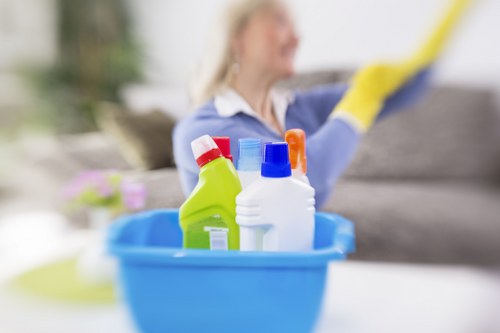 We reflect that borough-style approach by sorting materials carefully at source and ensuring that each load is assessed for the most sustainable route available.
We also place importance on using local transfer stations wherever possible. These facilities help consolidate recyclable material before it is sent onward for specialist treatment, reducing the need for unnecessary long-distance transport. By relying on local transfer stations in and around Sutton, our recycling and disposal routines can be more efficient, more traceable, and better aligned with regional waste-management infrastructure. This local focus also helps us support responsible handling of mixed materials, where careful sorting can make a significant difference to recovery rates.
Our environmental commitment extends beyond sorting alone. We work with charities and community partners so that items in good condition can be redirected for reuse rather than discarded. Where suitable, furniture, storage items, small household goods, and office materials may be passed to charity channels for a second life. These partnerships help reduce waste while supporting local good causes, and they form an important part of our Sutton sustainability strategy. Reuse is often the best form of recycling, and we treat it as a priority whenever practical.
 Alongside reuse and recycling, our fleet strategy is designed to lower emissions. We use low-carbon vans and modern transport methods where possible, selecting vehicles with improved fuel efficiency and reduced exhaust output. This matters because cleaning and clearance work can involve multiple trips across the borough, and smarter transport planning can significantly cut the carbon footprint of each project. Combining route optimisation with cleaner vehicles allows our eco-friendly deep cleaning service to operate with less environmental impact.
To support these aims, we review the type and volume of waste produced on each job. Materials are separated into recoverable and non-recoverable categories, with extra attention given to packaging, wrappers, disposable cloths, paper goods, and items from fit-out or post-cleaning clearances. In line with local borough expectations around waste separation, we avoid mixing recyclable materials with general waste where it can be prevented. This helps increase the chance that materials are processed correctly at the next stage.
We also encourage a hierarchy of responsible action: reduce, reuse, recycle. That means choosing durable supplies, limiting excess packaging, and reusing equipment where safe and hygienic to do so. When replacement is needed, we look for products with recyclable components or improved environmental performance. Our recycling-focused cleaning practice is therefore not just about disposal, but about planning ahead so less waste is created in the first place.
In practical terms, this can include separating paper towels from contaminated waste, identifying recyclable bottles and containers, and ensuring that cardboard is kept dry and clean enough for recovery. It can also mean directing certain materials to specialist channels when standard recycling is not suitable.  By following these steps, Deep Cleaning Sutton can provide a service that is both effective and environmentally aware, even when the work involves challenging or high-volume cleanups.
Another part of our sustainability work is ongoing staff awareness. Team members are trained to recognise which materials can be recycled, which can be reused, and which require safe disposal. This makes our Deep Cleaning Sutton recycling process consistent across different sites and different types of work. Whether the project is domestic, commercial, or after-works, the same environmental standards are applied with care and attention.
We also consider the impact of operational scheduling. By grouping work efficiently across Sutton and neighbouring areas, we can reduce unnecessary mileage and keep our van movements to a minimum. Combined with our use of low-carbon vans, this helps lower emissions while maintaining a reliable service. Fewer journeys, better routing, and smarter loading all contribute to a more sustainable operation.
 At Deep Cleaning Sutton, sustainability is a long-term commitment, not a short-term claim. From our 90% recycling target to our partnerships with charities, local transfer stations, and low-carbon transport choices, every part of the service is designed with the environment in mind. By aligning with Sutton’s wider approach to waste separation and responsible material recovery, we aim to deliver a cleaner result for our clients and a better outcome for the community.